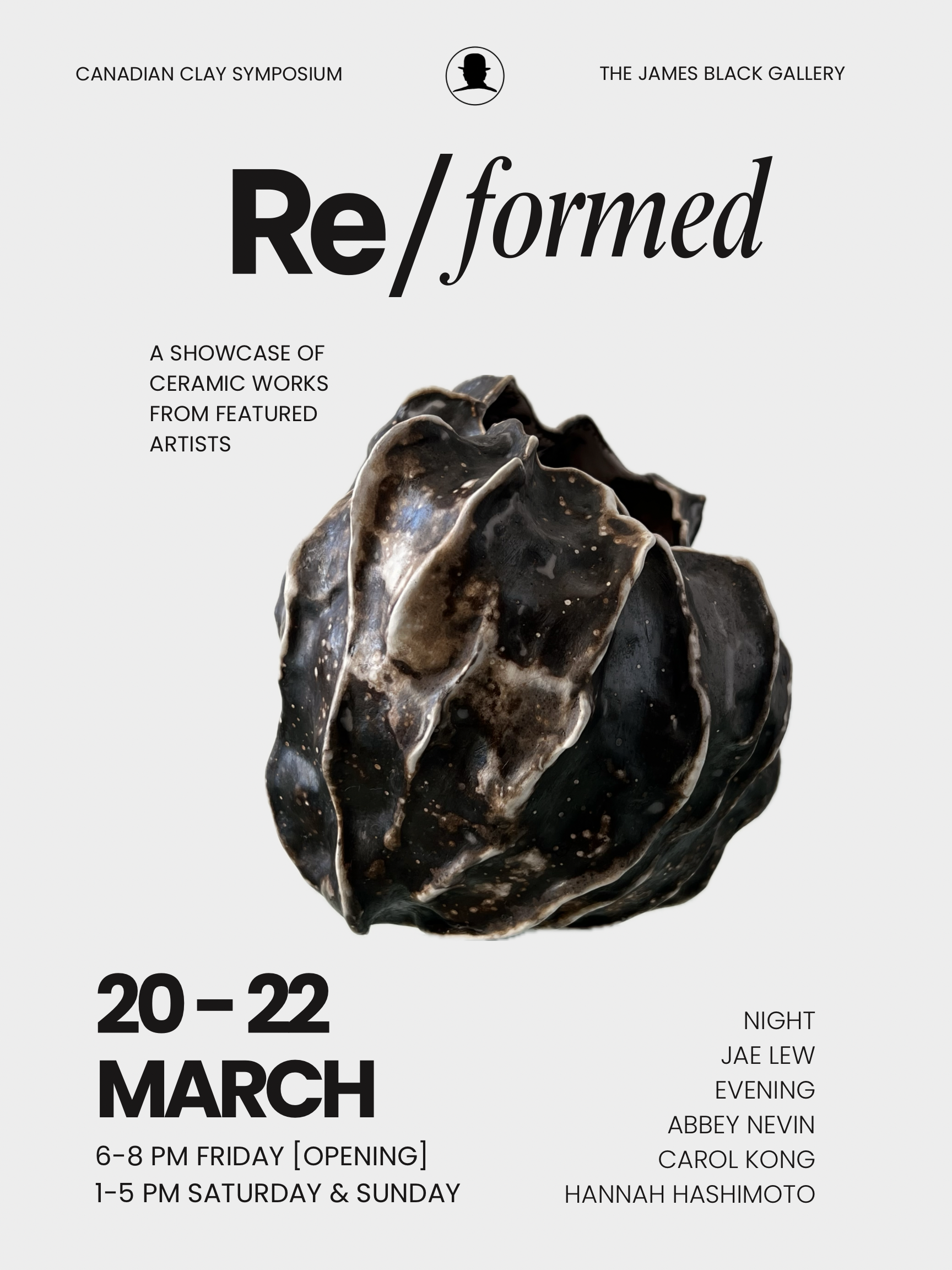
Re/formed
Group Exhibition
James Black Gallery | Canadian Clay Symposium
March 2026
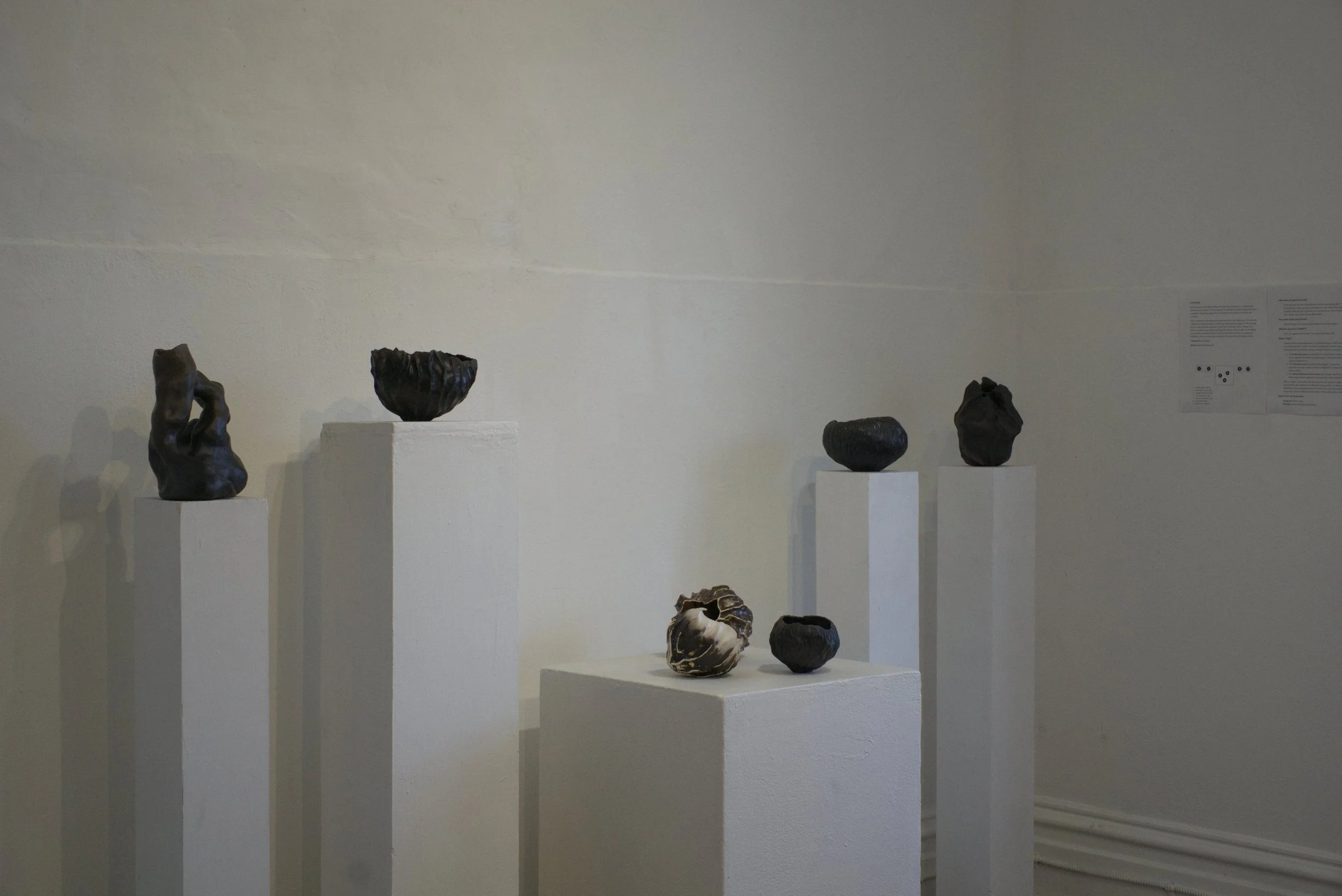
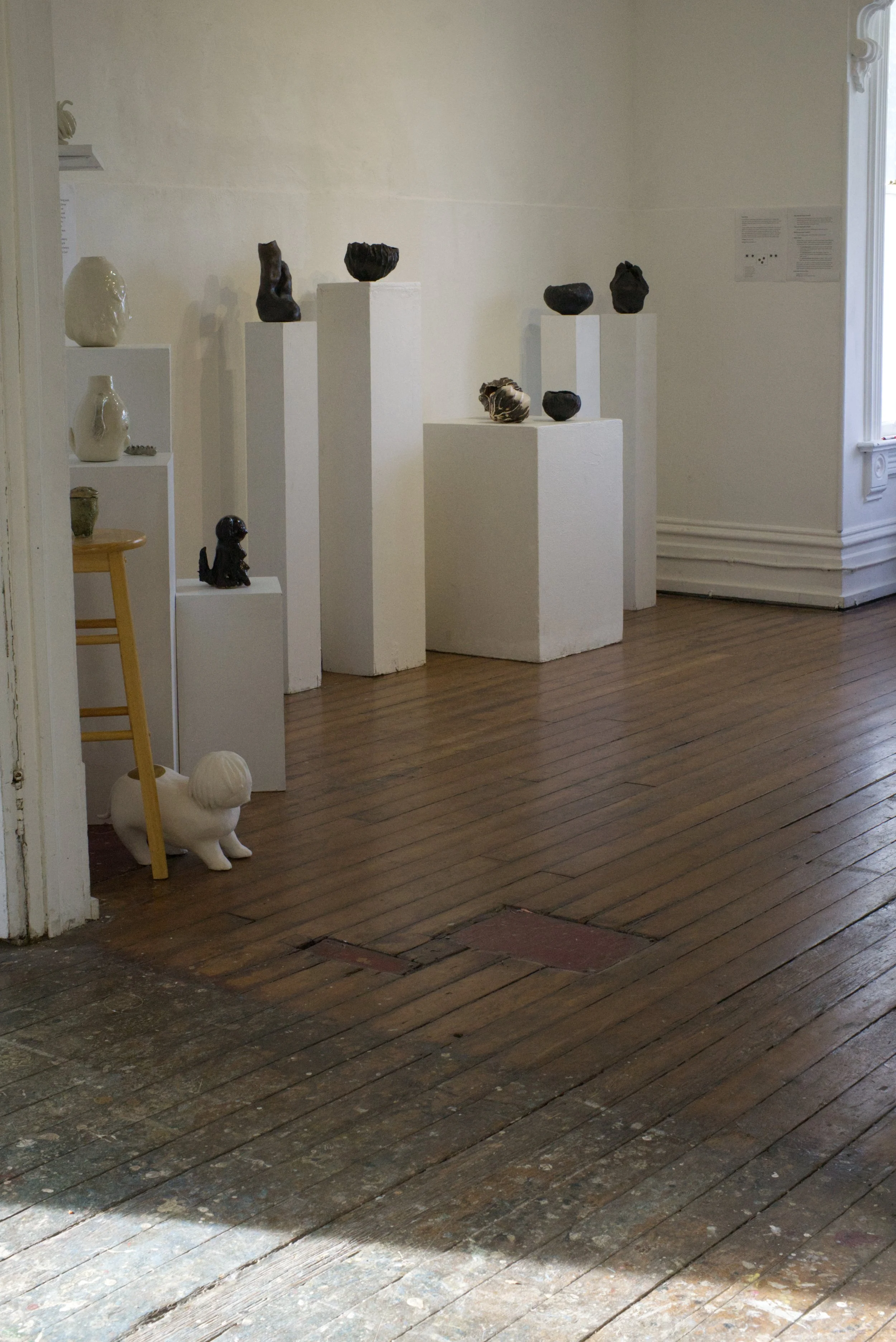
Re/formed brings together a dynamic group of contemporary ceramic artists whose work explores the transformation of material, form and meaning. A showcase of works by artists within the James Black Gallery ceramic studio space, including Carol Kong, Abbey Nevin, Hannah Hashimoto, Jae Lew, Night and Evening, the exhibition is presented as part of the 2026 Canadian Clay Symposium (Clay: How Hard Can it Be?).
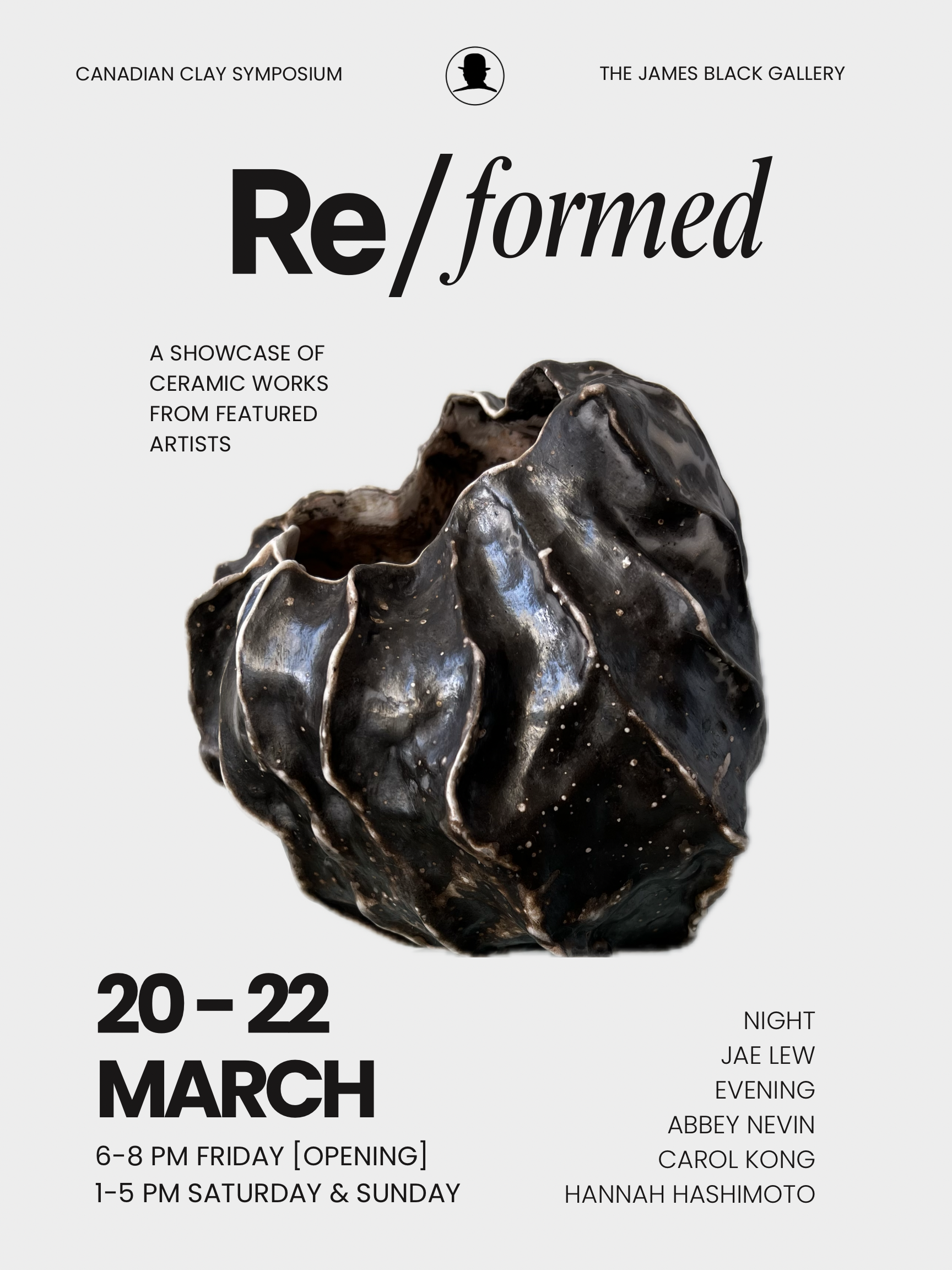
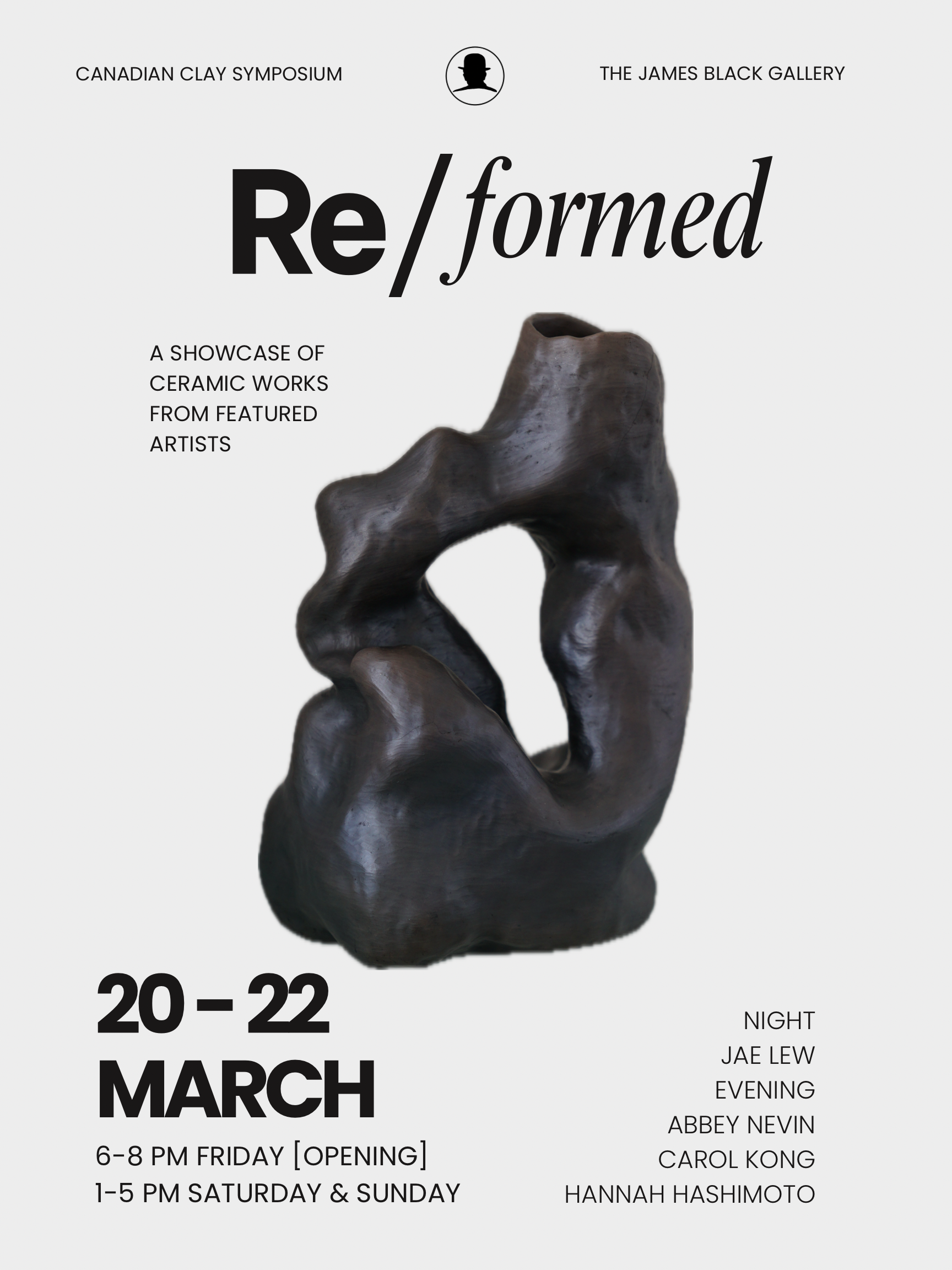
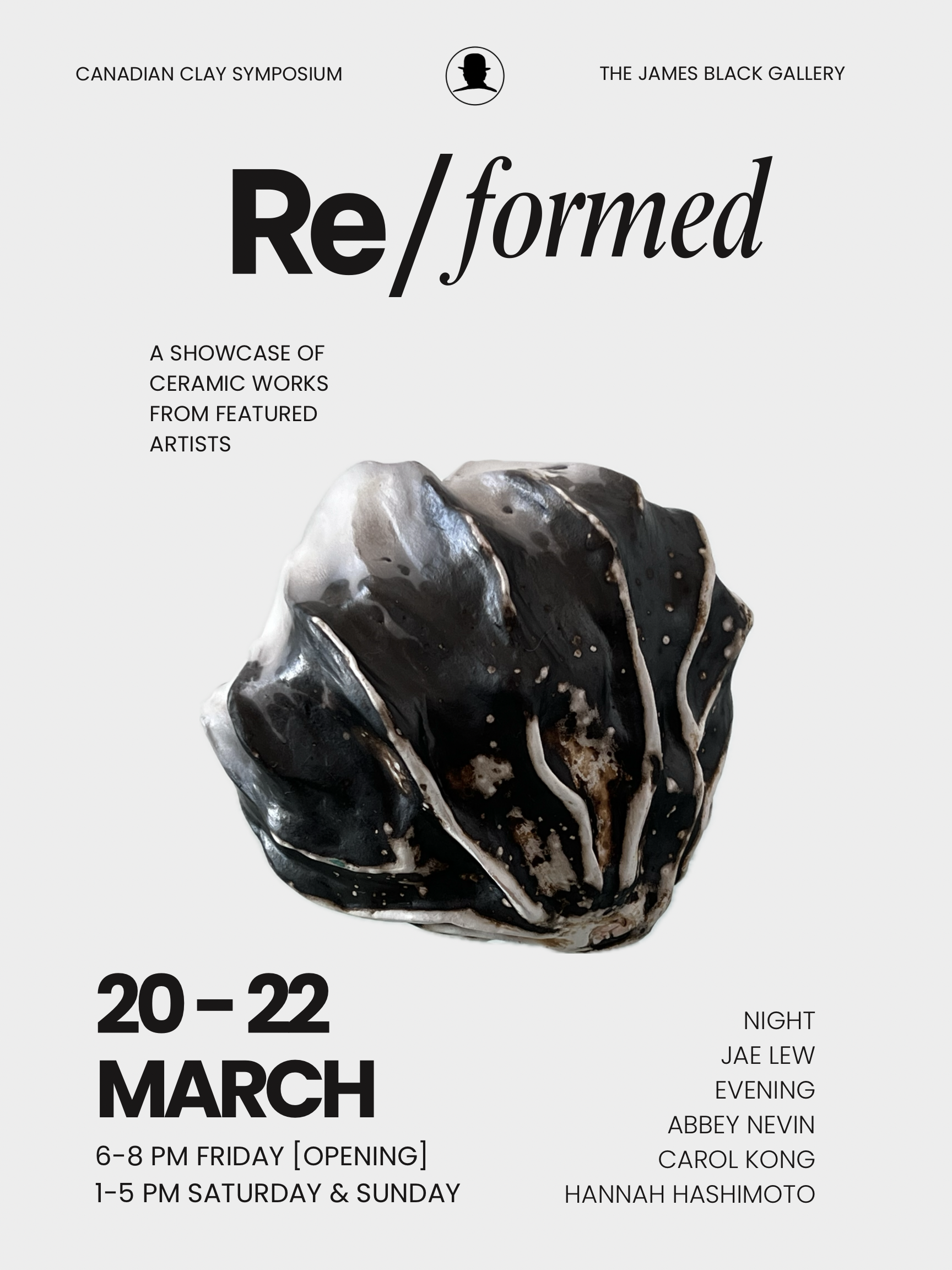
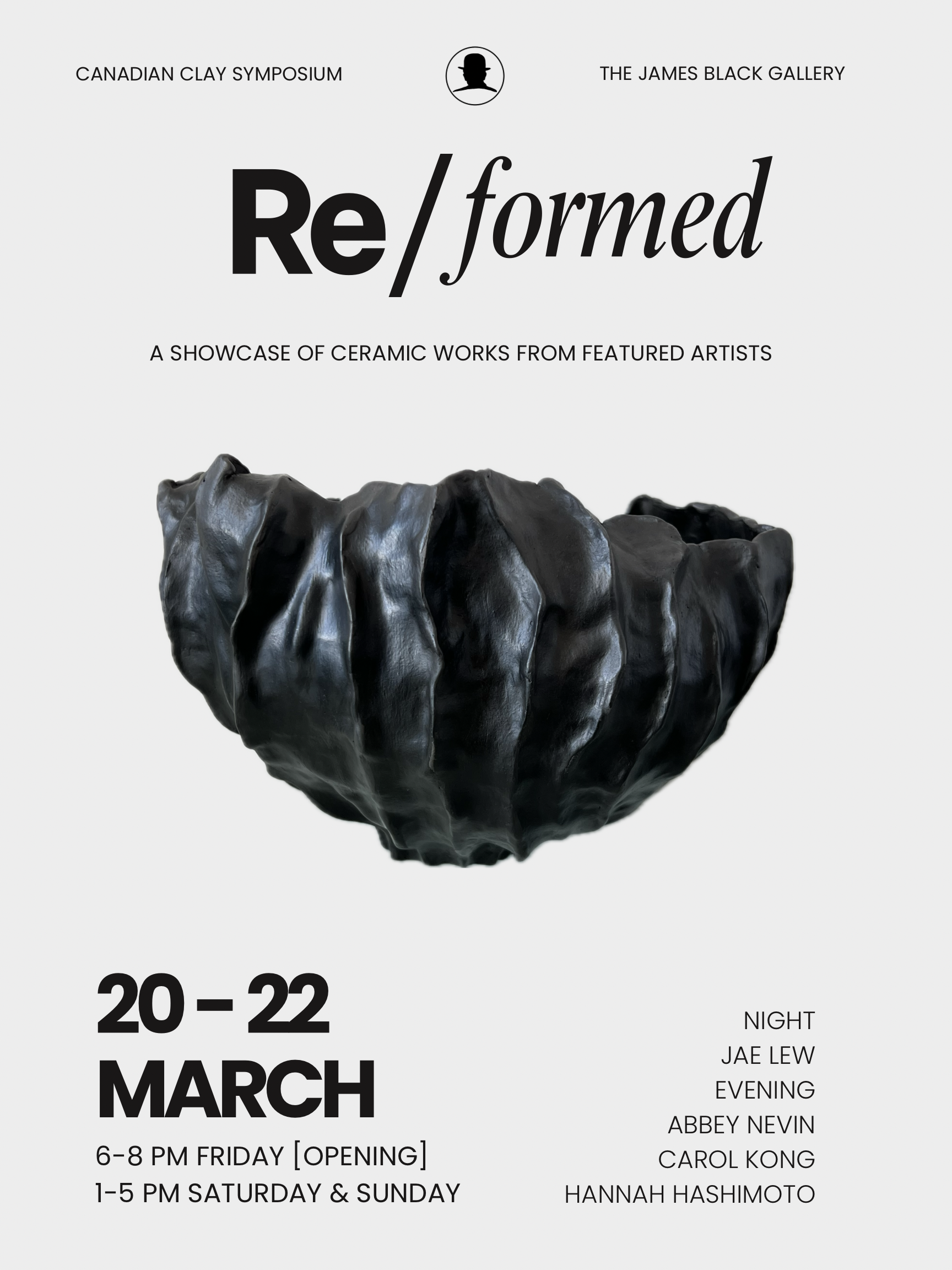
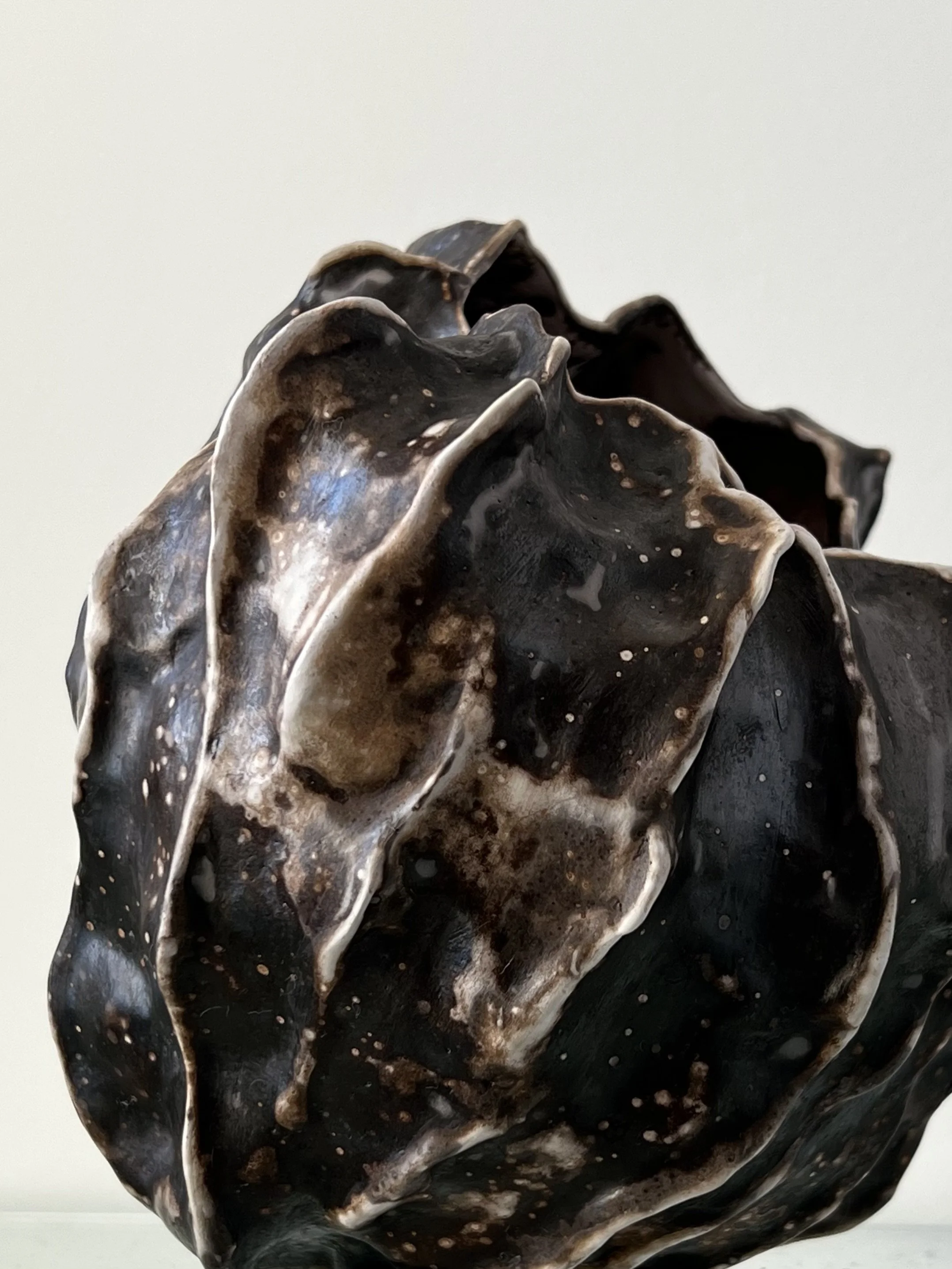
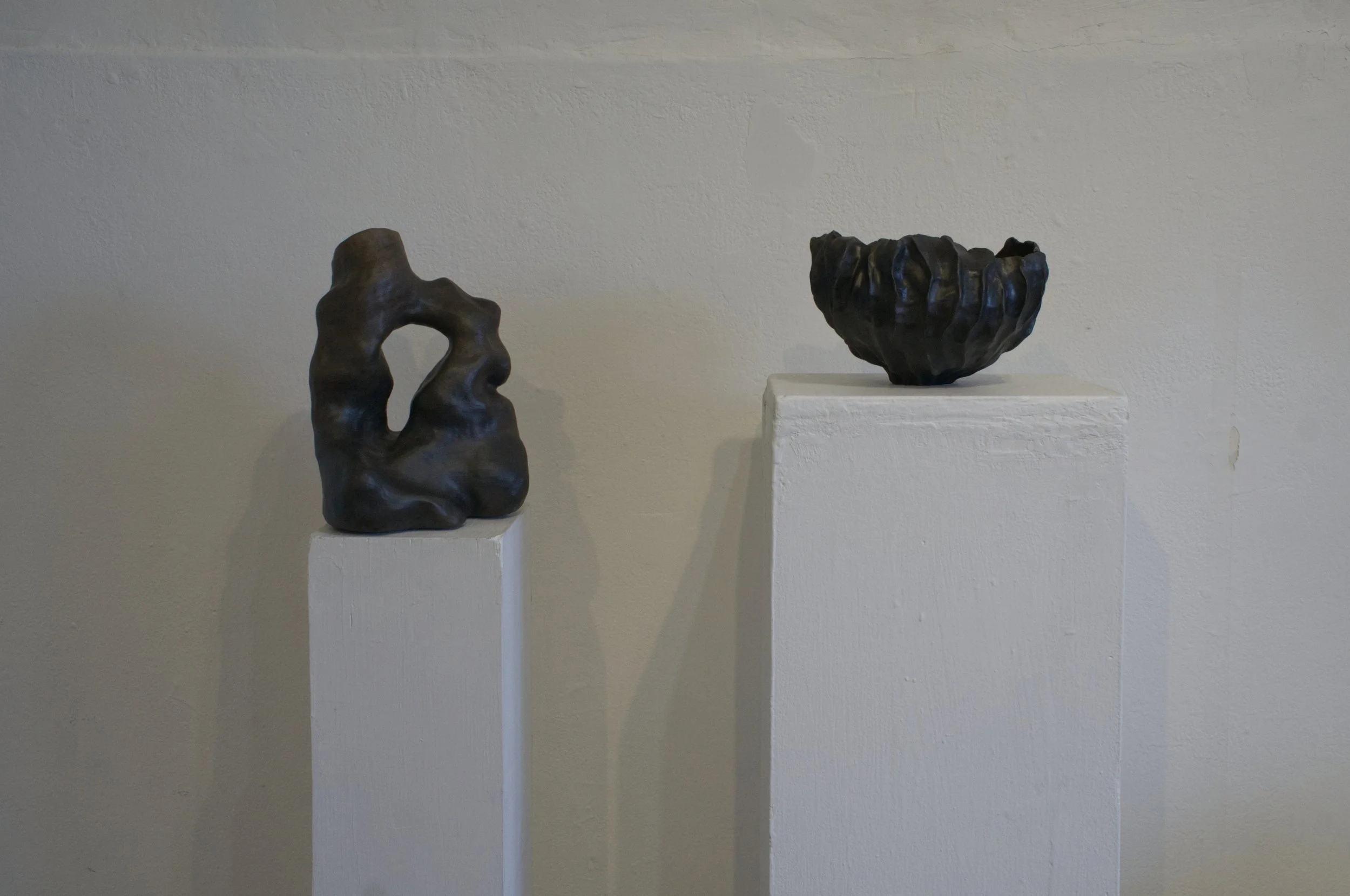
Carol Kong’s smoke-fired sculptures are delicate and lightweight, like desiccated skeletons of seedpods, sea creatures or scorched landscapes. They remind us of the fragility of nature and cycle of organic life.


The Process Explained
How were the pieces formed?
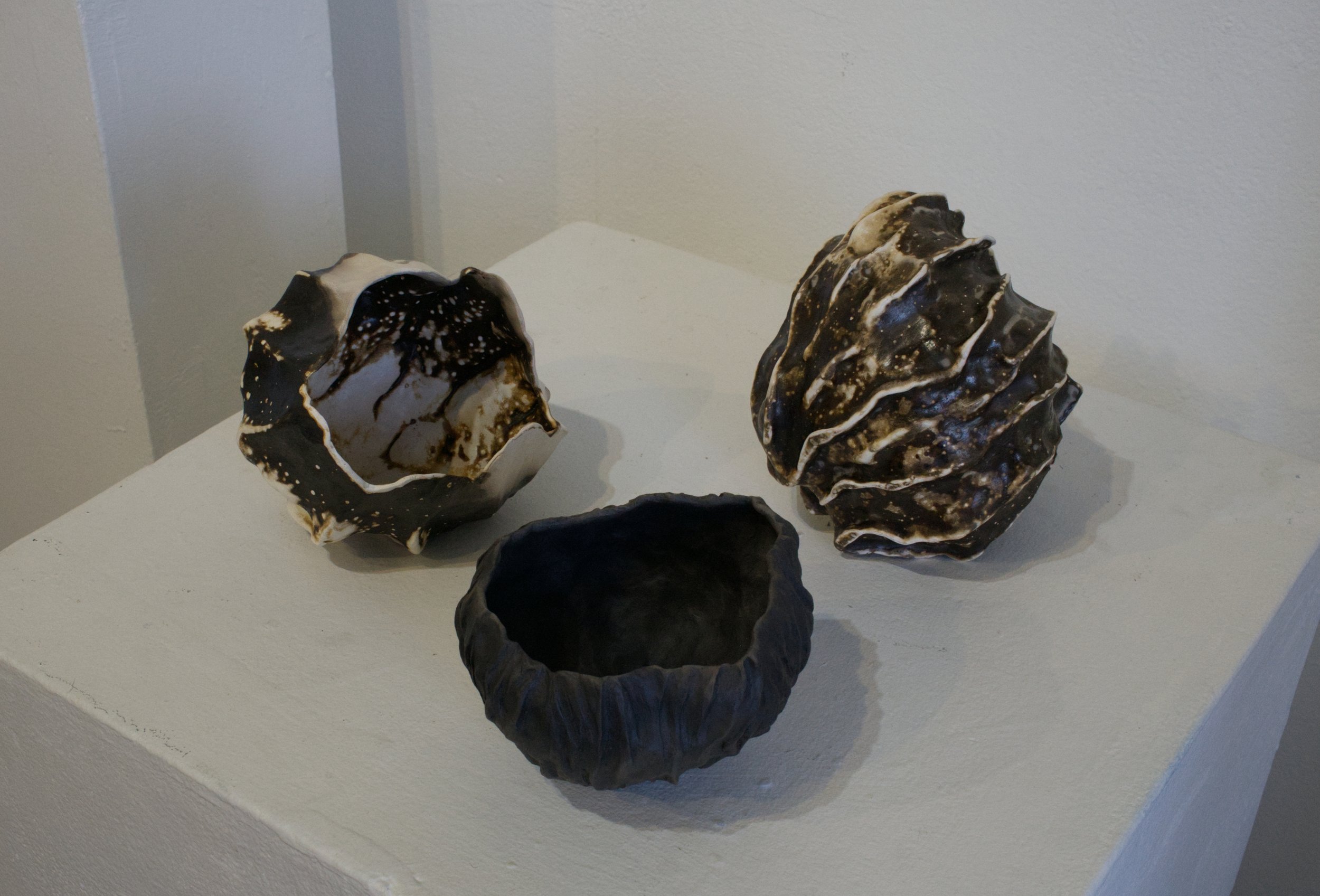
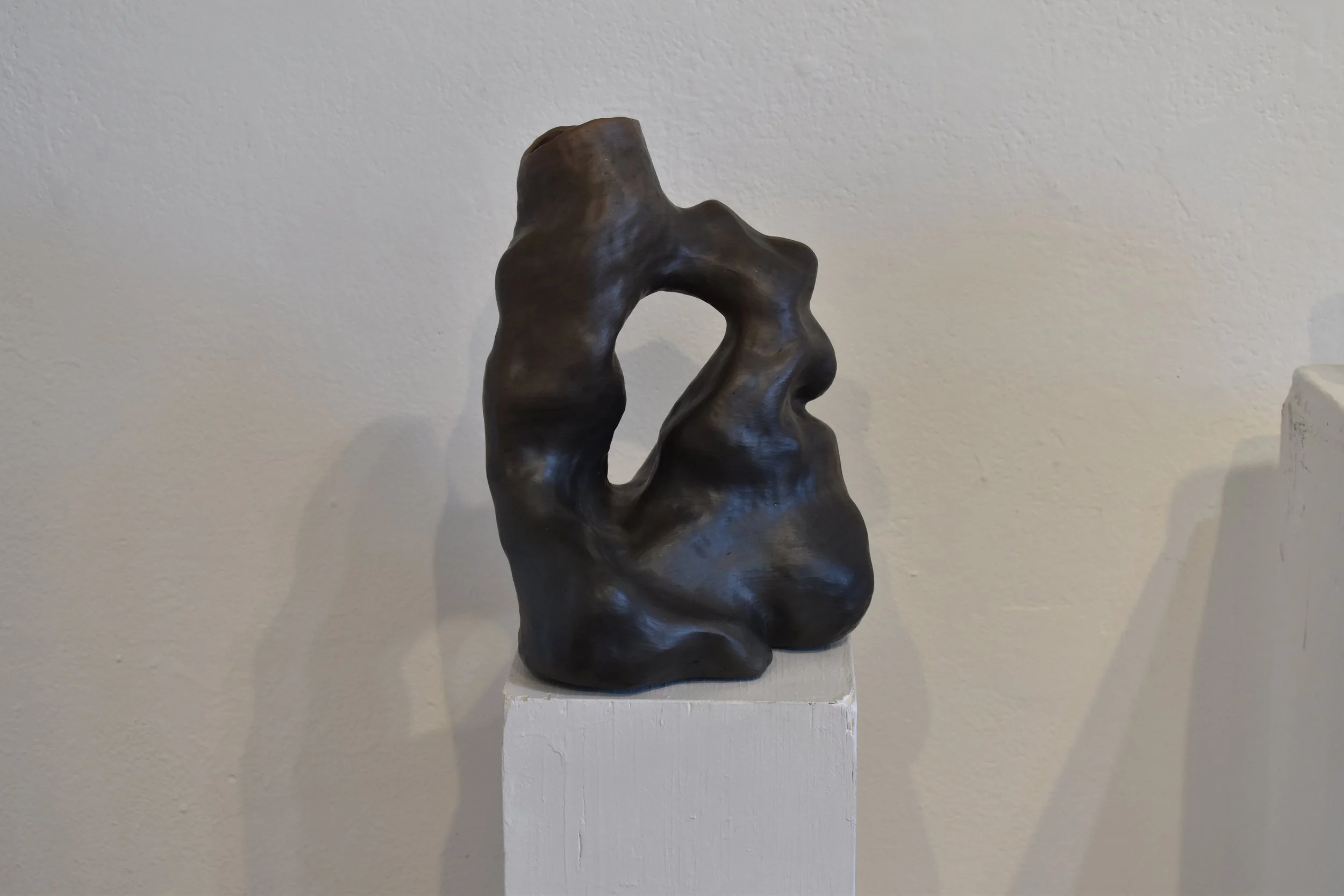
All the pieces are hand pinched from a ball of clay, adding coils as they are built larger. Some are made with paperclay – the paper fibres add structure while the clay is wet and allowing pieces to be worked thinner, but it burns out when firing so the pieces are very lightweight.
How were the pieces fired?
They were all fired through a naked raku process that carbonizes the surface.
What do you mean “naked”?
There is no glaze on the surface. The surface is the clay itself.
What is Raku?
Western Raku is a low-temperature, fast firing technique in which the wares are quickly heated to ~1000 °C, then removed from the kiln while hot using big iron tongs, exposed to a oxygen-deprived environment (reduction), and then quickly cooled.
In the absence of oxygen in the atmosphere around it, combustion continues by drawing oxygen from the oxides in the clay itself, and changing the colour and properties of the surface.
Raku is a dance - the rhythm and knowing when the moment is right, how to be delicate yet confident in handling hot work, and to act swiftly and decisively as our energy gets transferred into our art.
How was the surface texture of each piece achieved?
The matte black pieces are smoked in a sealed chamber with shredded paper. As the paper burns without enough oxygen, it draws that from the clay and turns the surface black. Glossy magazine paper is used due to the kaolin content.
The shiny black pieces also have “Terra Sigilata”, a super-fine porcelain that was rubbed in and burnished to be super smooth, using my fingers and plastic bag.
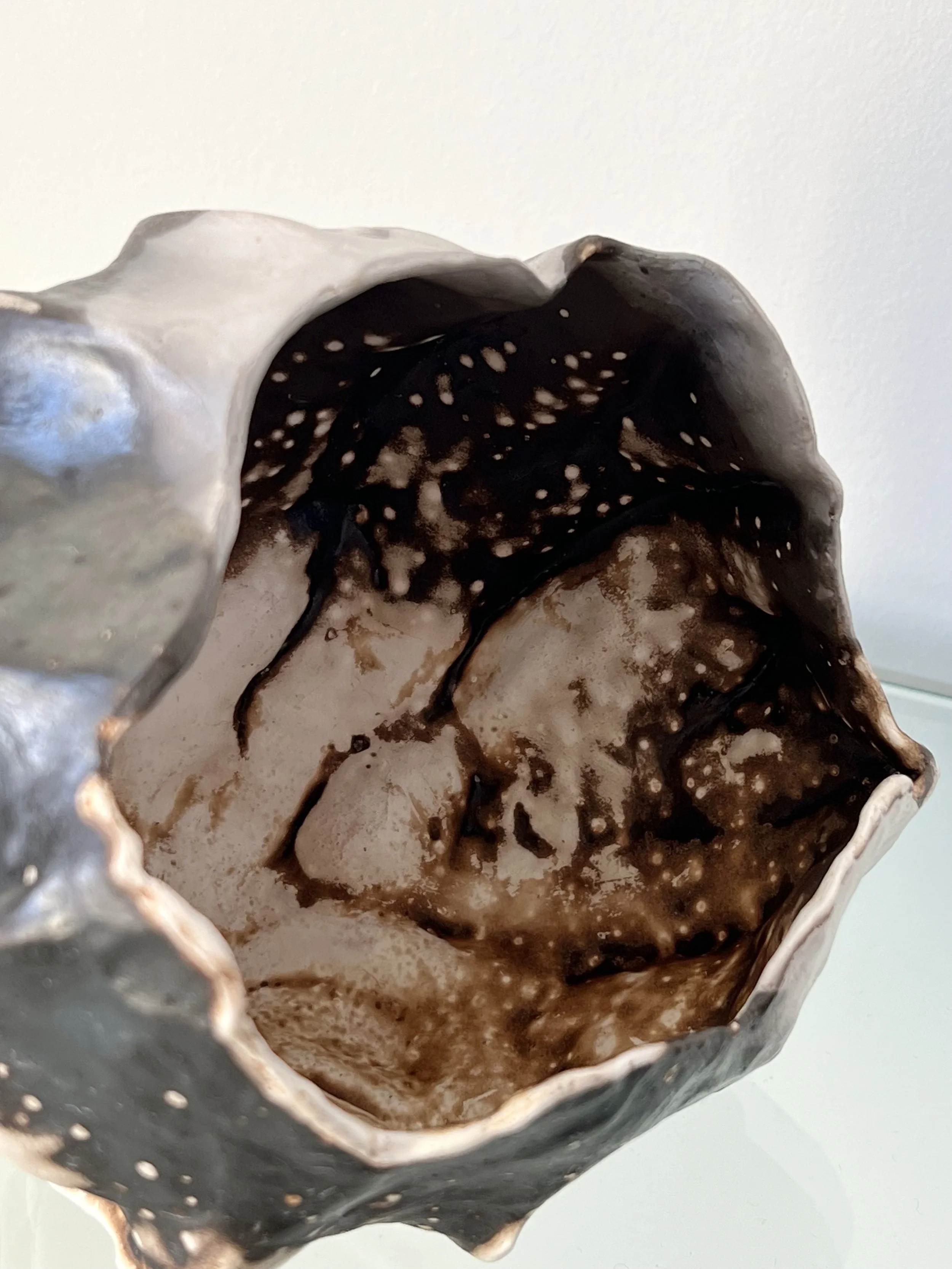
The white/black/brown starry pieces are “obvara”, which is an old baltic-region process dipping the hot pots into a fermented batter (a mixture of flour, sugar, and yeast that was fermented for 3 days).