Obvara
Baltic Raku
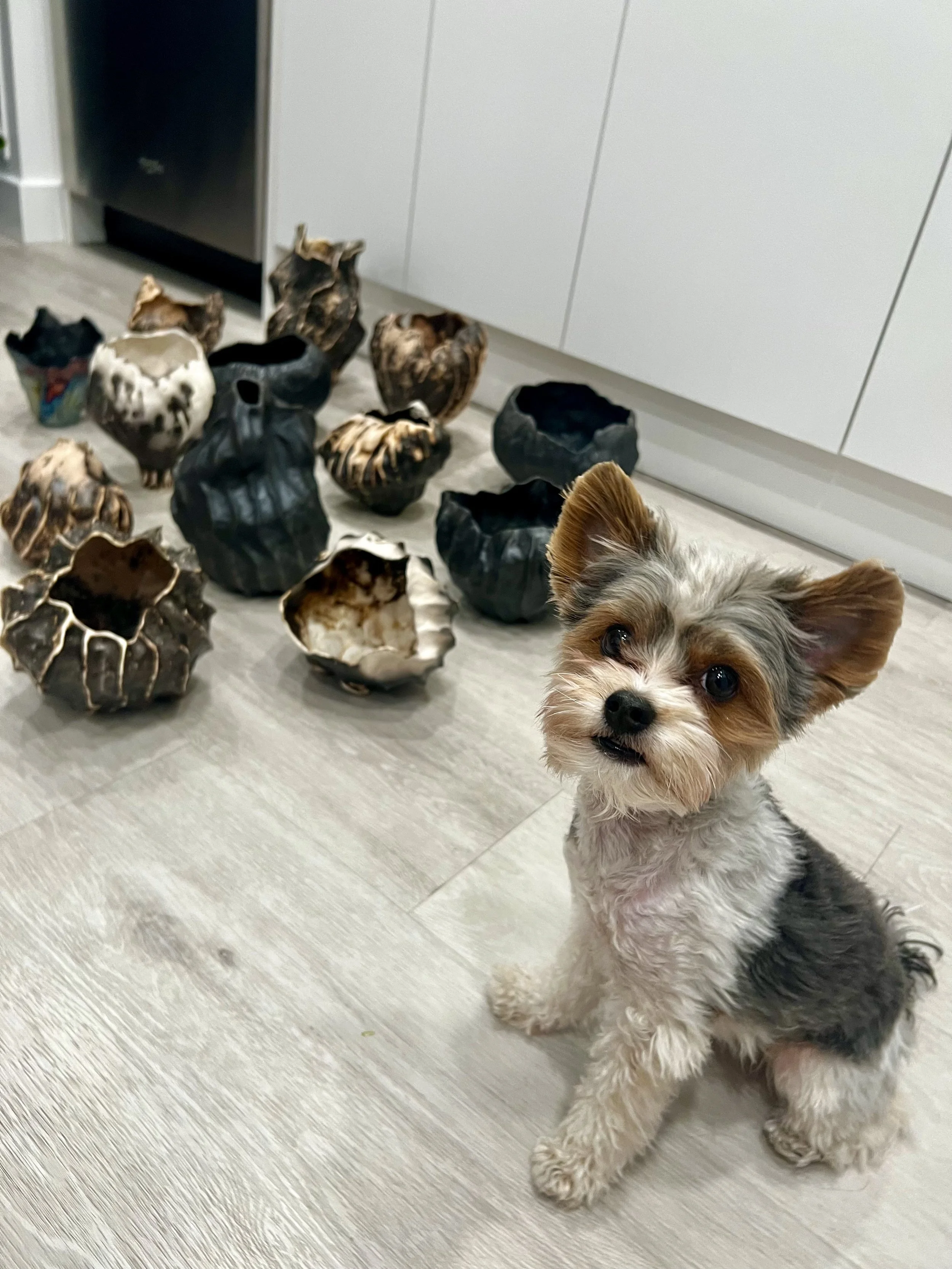
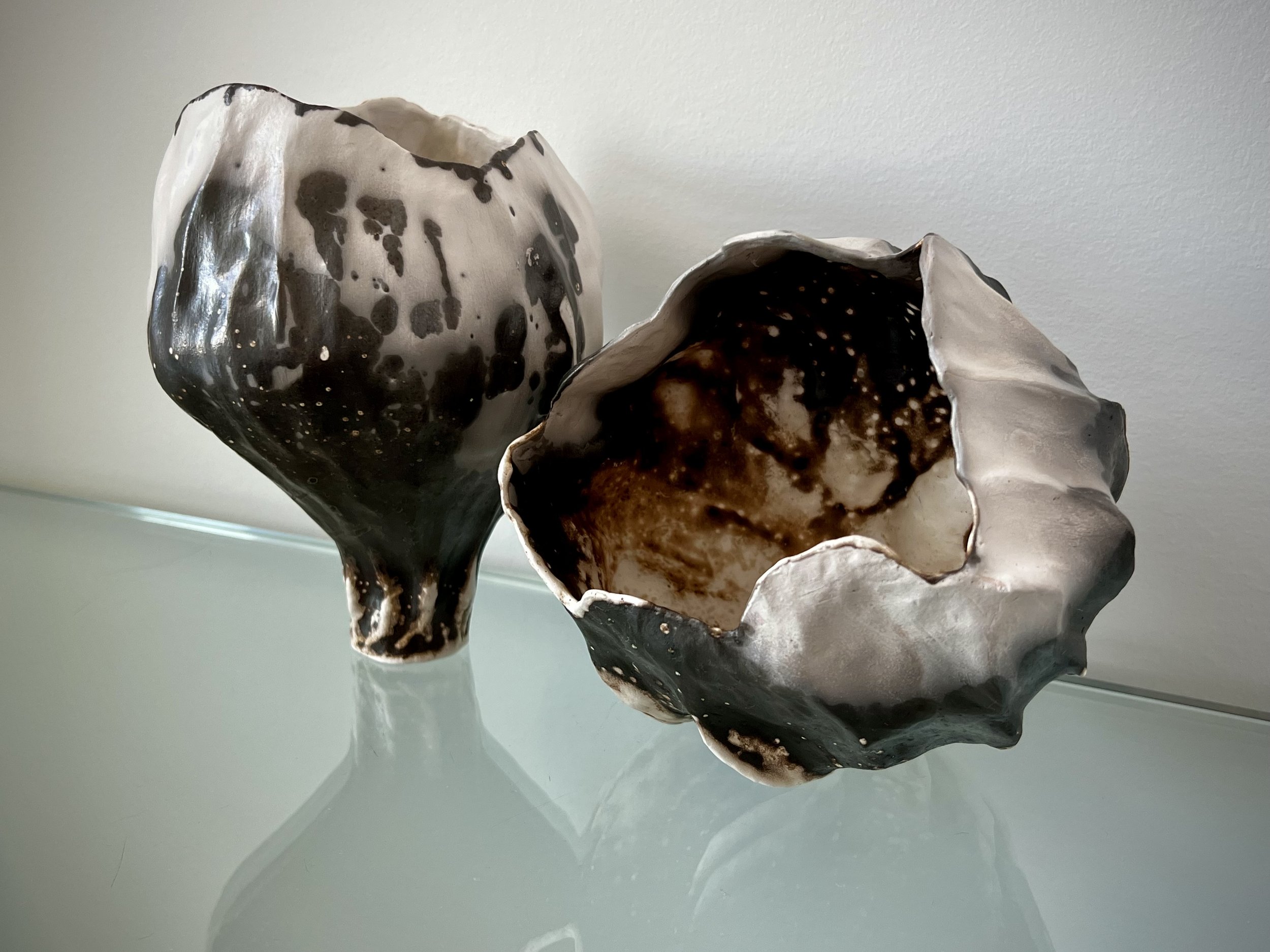
Obvara firing is a low-firing technique that originated in Eastern Europe (hence the name Baltic Raku) in the 10th-12th centuries. It is a naked raku process to seal the surface by scalding pots in a fermented batter, though the surface remains rather porous still. Quickly firing to temperature, pots are removed from the kiln while hot, then dipped into the batter and then water to cool rapidly.
I used a standard Obvara batter recipe found online, which included 1 kg of flour, 1 tablespoon of sugar and 2 packets of yeast mixed into 10L of warm water. This was fermented inside for about 3 days, stirring occasionally, as the sugars and air bubbles create the more celestial patterns.
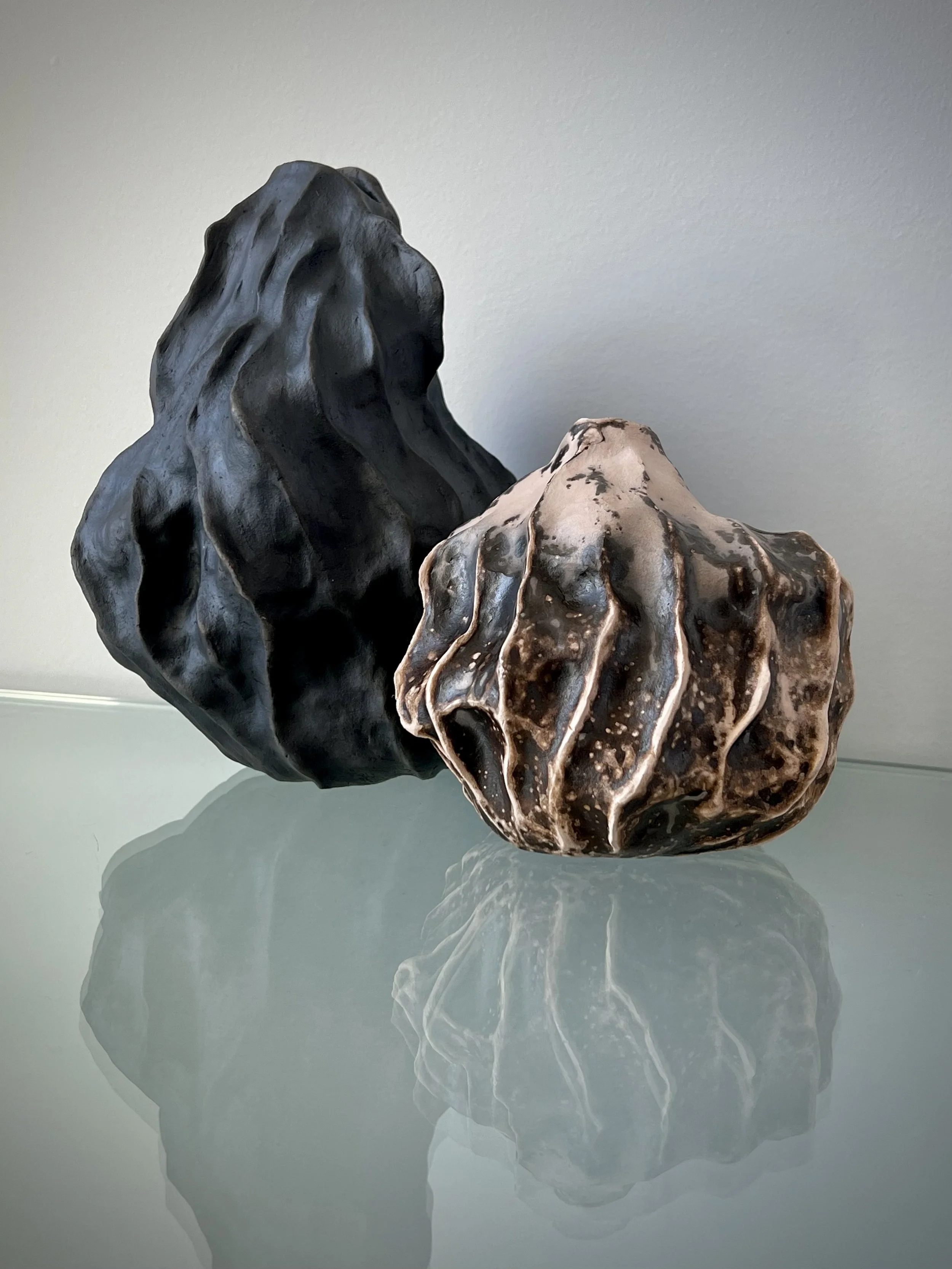
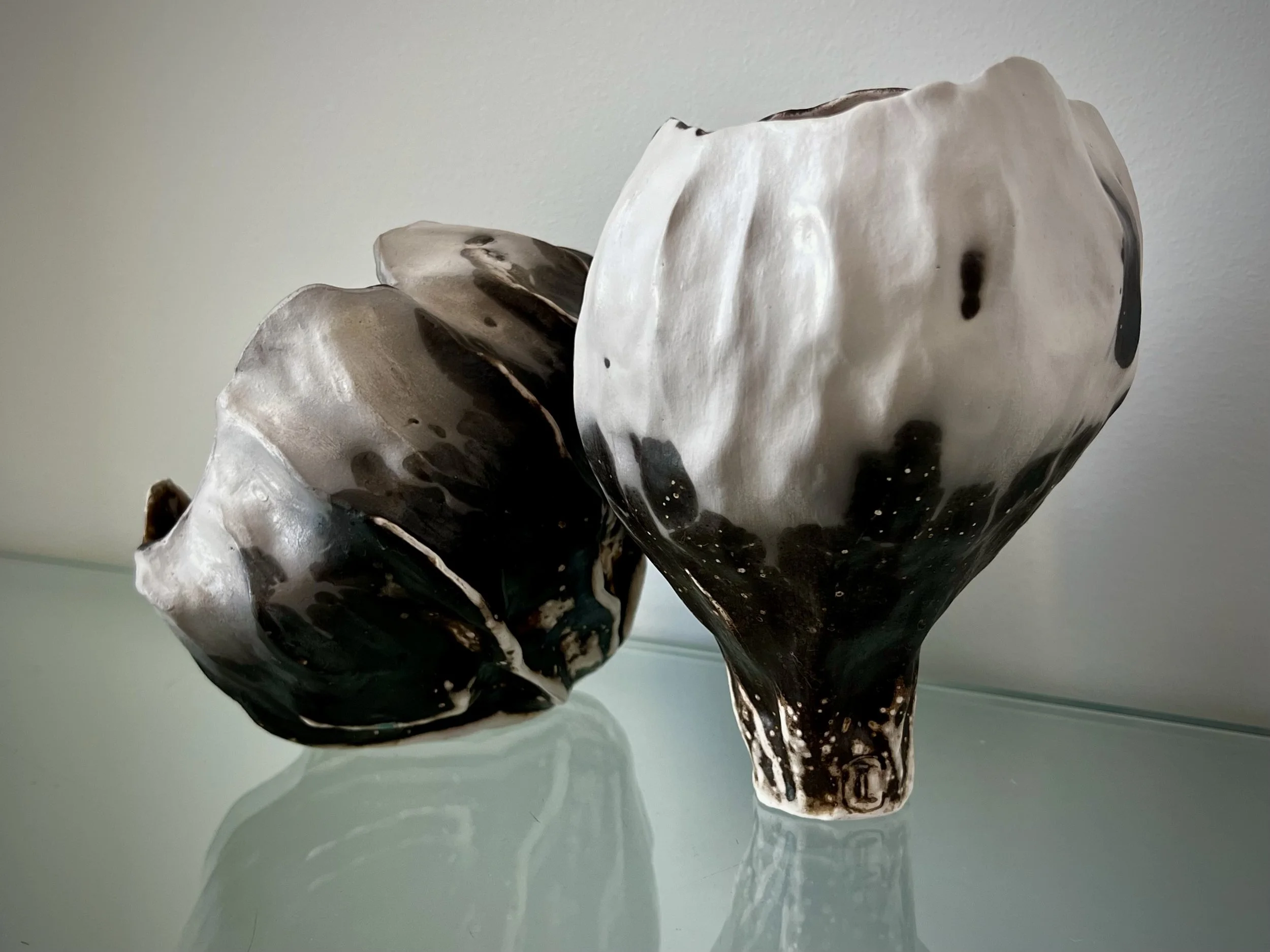
As obvara is a low-fire naked raku technique, the bisque colour remained quite prominent and I much less prefer the pinkish bisque colour of SPS Vashon White Paperclay (Seattle Pottery Supply). Similarly, I found the textured and rougher surfaces to be less successful, but loved how obvara worked on sculptural pieces using paperclay with terra sigilata, which created smooth surfaces with celestial and fossil-like patterning.
There is supposedly some ability to control the carbon pattern, such as by dipping the pot at a particular angle, at various speeds, or by double dipping, but in the heat of the moment I did not record notes. Aside from realizing that the effectiveness waned as the kiln cooled from opening the lid to remove pots and as the batter warmed up (although I now posit this led to more variation in lighter browns and midtones), I did not experiment enough to know how to coax the carbon imprints any which way.
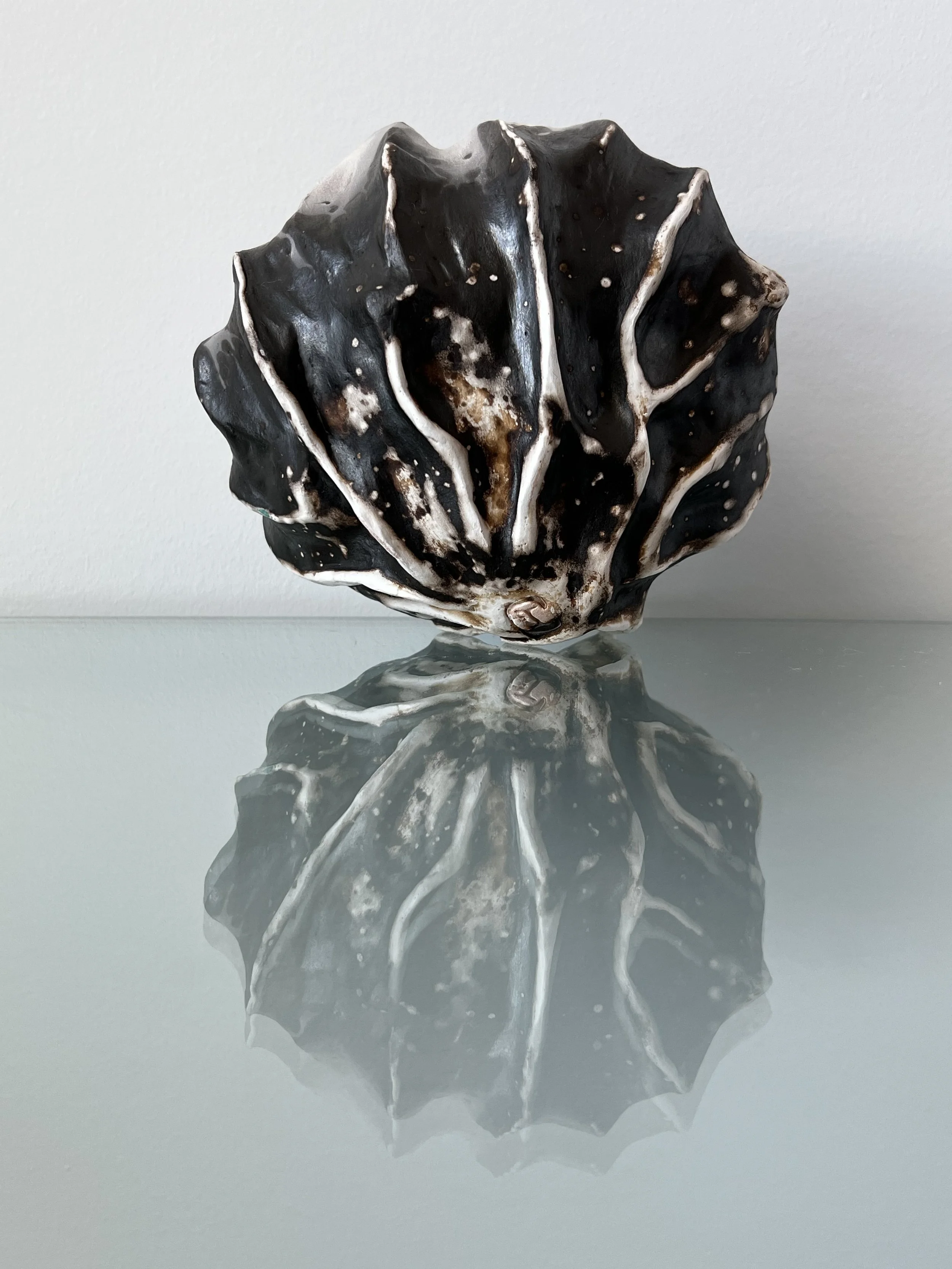
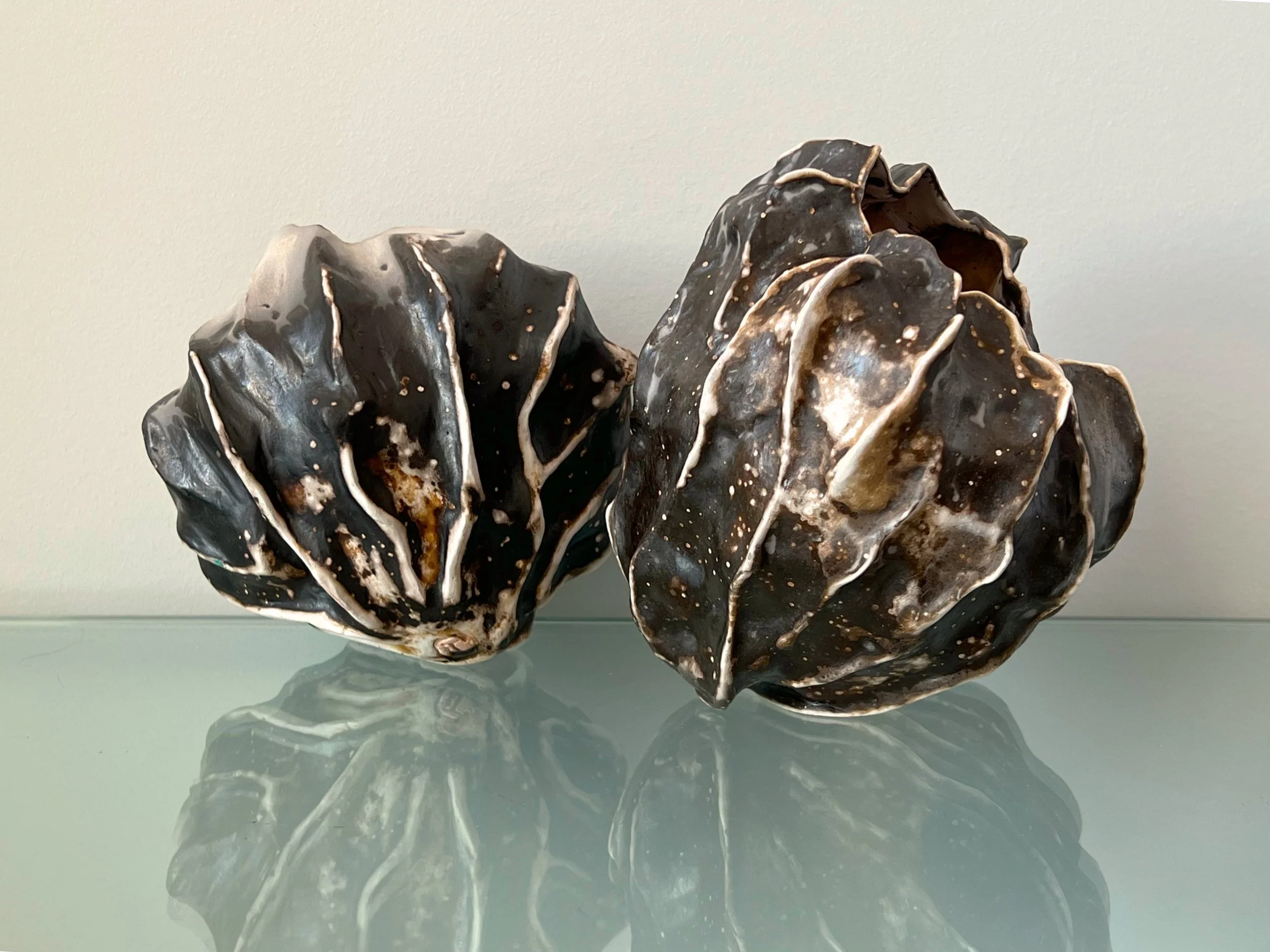
In fact, one of the pieces came out two faced with entirely opposite patterning on either side. On one side the ridges are etched in carbon with a smooth white surface in the valleys, while on the other side the ridges remain a light bisque colour and the valleys are blackened or retain a rougher texture.
The whole process remains rather mysterious to me, adding to the allure.
One side of an obvara-fired shell sculpture
The other side of the same obvara-fired shell sculpture